

Top Deejay HeadphonesTo Give Your Ears The Best Sound
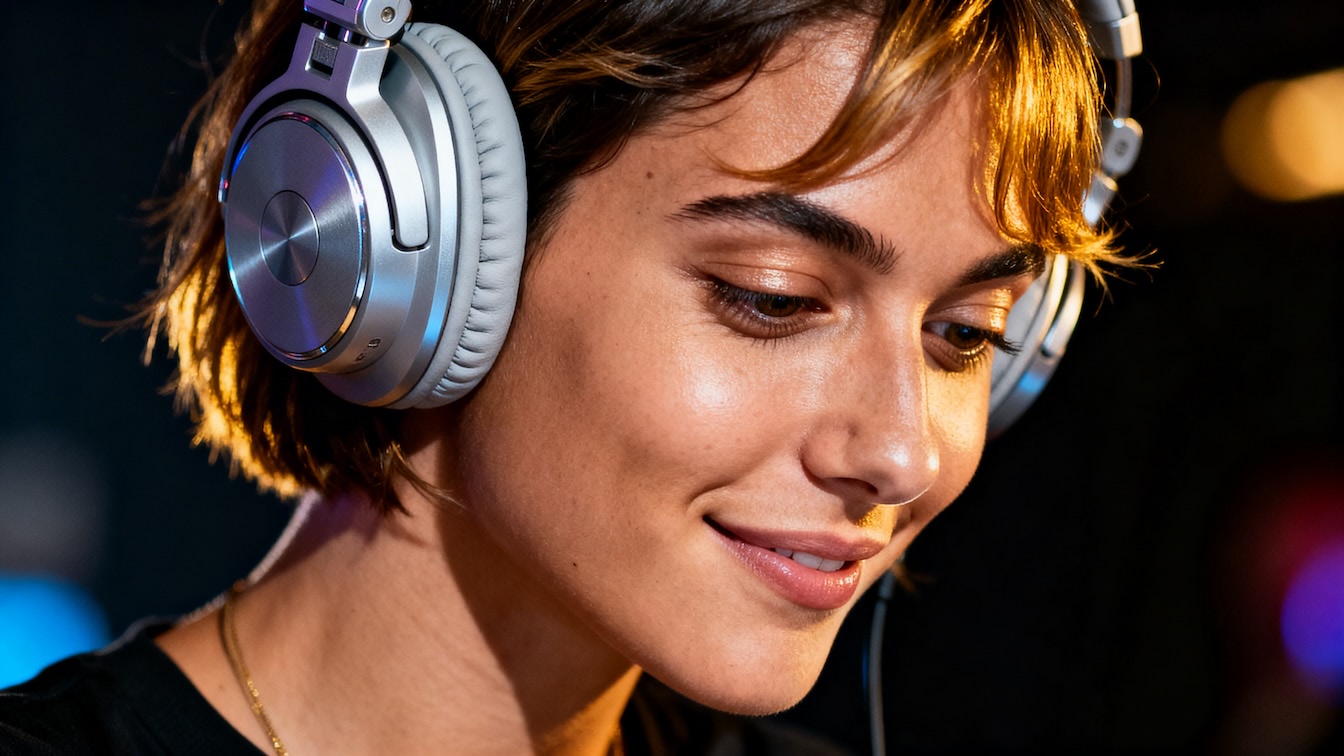
In the high-stakes environment of a 2026 club booth, your headphones aren’t just an accessory; they are a mission-critical I/O interface. When you’re monitoring tracks against a 110dB house system, consumer-grade gear fails. You need high SPL (Sound Pressure Level) handling, low-impedance drivers, and surgical isolation.
Here is the breakdown of the most powerful DJ monitoring hardware currently dominating the circuit.
01 // The AlphaTheta HDJ-F10 (The Latency Killer)
-
The Tech: Proprietary SonicLink ultra-low latency wireless protocol.
-
Specs: 5Hz – 40kHz frequency response; 105dB sensitivity.
-
Why it’s Alpha: For decades, wireless DJing was a myth due to Bluetooth lag (often >200ms). The HDJ-F10 utilizes a dedicated 2.4GHz transmitter to bring latency down to sub-9ms. You can finally beatmatch wirelessly with the precision of a wired connection. It’s built with high-capacity 40mm drivers designed to handle the “kick” without bottoming out at high volumes.
02 // The Sennheiser HD 25 (The Industry Binary)
-
The Tech: High-sensitivity 70-ohm transducers.
-
Specs: 120dB Max SPL; weight: 140g.
-
The “Nerd” Factor: This is the most modular piece of hardware in the game. Every single component—from the capsule to the split-headband—is user-replaceable. In a booth environment, weight is your enemy; at 140g, the HD 25 is nearly half the weight of its competitors, preventing neck fatigue during 5-hour sets. Its 120dB SPL rating means it can cut through even the most aggressive booth monitors without harmonic distortion.
03 // AIAIAI TMA-2 DJ Wireless+
-
The Tech: W+ Link (Uncompressed 1500kbps audio).
-
Specs: 40mm Bio-cellulose drivers; 32-ohm impedance.
-
Why it’s for Technologists: AIAIAI treats headphones like a PC build. You choose the speaker units, the earpads, and the headband. Their W+ Link technology uses a dedicated radio frequency to deliver uncompressed, lossless audio. Unlike the “warm” consumer tuning of most headphones, the TMA-2 is tuned for a punchy, mid-forward signature that makes finding the “one” in a muddy kick drum incredibly easy.
04 // V-MODA Crossfade 3 Wireless
-
The Tech: Dual-diaphragm 50mm drivers.
-
Specs: 5Hz – 40kHz (Hi-Res Audio certified); 32-ohm impedance.
-
The Build: If your gig involves travel, the Crossfade 3 is the “ruggedized server” of headphones. It uses a steel-flex headband and military-grade durability (MIL-STD-810G). The dual-diaphragm design separates the bass from the mids and highs, preventing the “bloat” that usually plagues high-output DJ cans. It’s the perfect hybrid for someone who produces on the flight and performs at the club.
The Monitoring Protocol: Pro Tip
DJs don’t listen like audiophiles. In a loud room, the human ear loses sensitivity to highs and lows. To compensate, always look for headphones with a closed-back design for maximum passive isolation (usually >25dB). If your headphones have a high impedance (e.g., >100 ohms), your DJ controller might not have the voltage to drive them loud enough—always stick to the 32–70 ohm range for maximum headroom on standard club mixers.

Related Posts

Trust in your intuitions
When you are alone for days or weeks at…